Category: Article

  • Habit Stacking for Success

    Habit Stacking for Success

    Are you trying to adopt new, healthier habits? Good for you!

    One tried-and-true way to make newly desired habits become routine is called habit stacking. With habit stacking, you connect a new habit to an existing habit. Visualize it as “stacking” one habit on top of another one.

    The goal is to tie small, repeatable and beneficial new habits into your existing routine. For example, when you shut off your alarm in the morning, take a moment to stretch your arms, legs, ankles and feet before springing into action. In this example, the healthy habit of stretching is “stacked” onto your existing wake-up routine. 

    Habit stacking ideas 

    You can use habit stacking to introduce and build lots of healthy habits within your day. 

    You can add in physical activity, mindful breathing or even maybe a little extra serenity. For example, when you walk to your mailbox or car, make it a point to take in the sights around you and slowly breathe in the outside air. 

    Habit stacking can help you build a healthier lifestyle by gradually adding positive habits to your daily routine. 

  • Protein in plants? It’s in there – and here’s why you should try it

    Protein in plants? It’s in there – and here’s why you should try it

    Protein. It’s what’s for dinner.

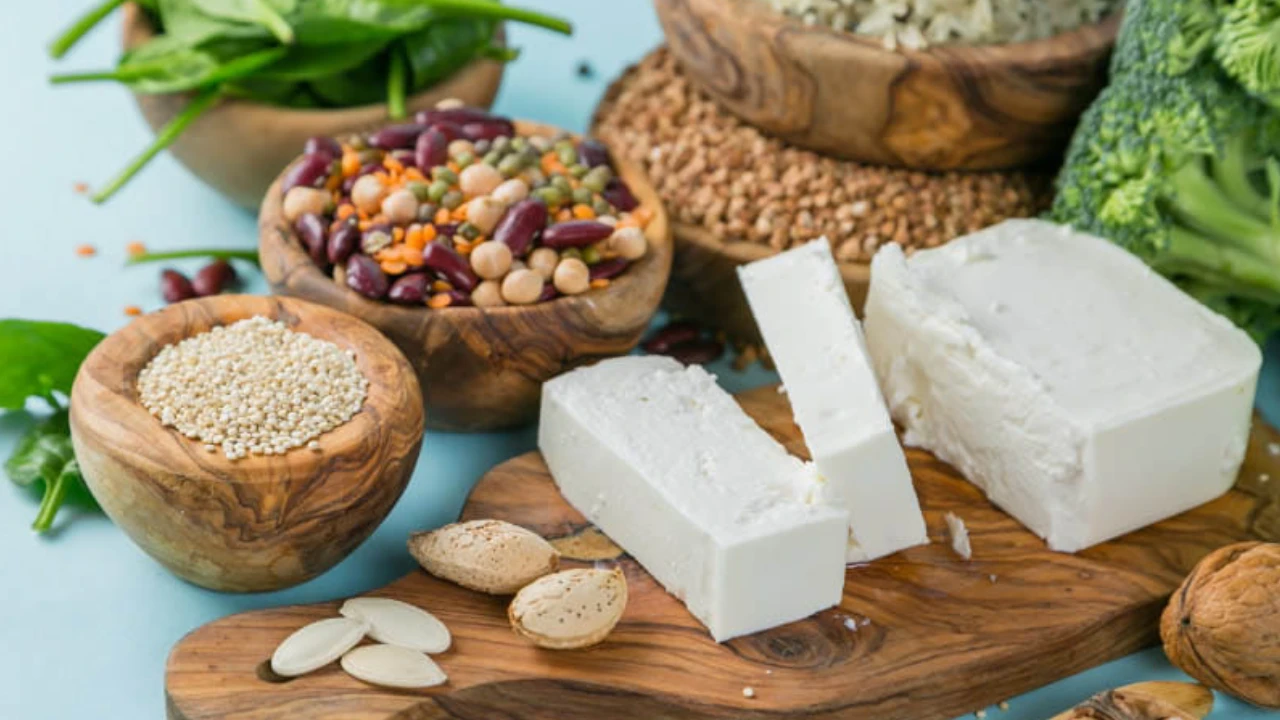
    But many consumers are realizing they don’t need a steak on the table for protein. Instead, they’re turning their tastes toward plant-based sources.

    Dr. Andrea Glenn, an assistant professor of nutrition at New York University in New York City, said it’s as easy to get protein from sources that grow in the field as it is from the animals that graze there.

    “All plants contain protein,” she said.

    Why do we need it?

    Protein is a macronutrient, meaning the body needs it in large amounts for different things, such as building muscle and bones, forming cartilage, skin and blood, and providing calories that give the body energy. Hormones, vitamins and enzymes that support the cells in the immune system are also made from protein.

    “It’s essential for life, really,” Glenn said.

    How much is enough?

    The recommended daily allowance for protein consumption for adults is 0.8 grams per kilogram of body weight, or about 0.36 grams per pound. For a person who weighs 150 pounds, that’s about 54 grams of protein per day.

    Children and pregnant or breastfeeding women need slightly more grams of protein per kilogram of body weight for tissue growth and development.

    Eating enough protein is important as people age to prevent the loss of lean muscle mass, according to federal dietary guidelines. But 50% of women and 30% of men 71 and older don’t eat enough of it.

    Overall, adult men do a better job of consuming protein than women, who often fall short of the recommended daily amounts, the guidelines say. The deficits seem to come from the types of protein people choose and how they eat them. Adults in the U.S. typically consume protein as part of a mixed dish, such as a casserole, or in a pasta dish or sandwich, which can contain higher amounts of saturated fat and sodium and other less nutrient-dense ingredients.

    While most people – 3 out of 4 – meet or exceed the recommendation for protein from meats, poultry and eggs, nearly 90% don’t eat enough seafood and more than half don’t meet the recommendation for nuts, seeds and soy products, according to the federal dietary guidelines.

    The American Heart Association encourages adults to get most of their protein from plants, such as legumes and nuts, as well as from seafood and low-fat dairy products. Animal-based proteins should come from lean cuts of meat and skinless poultry. Processed meat should be avoided.

  • Struggling to sort through nutrition advice? Don’t forget the joy, this expert says

    Struggling to sort through nutrition advice? Don’t forget the joy, this expert says

    Dr. Matthew Landry is a nutrition expert who understands that keeping up with ever-changing nutrition advice can be a challenge.

    It doesn’t have to be, he said.

    “Whenever we overcomplicate nutrition guidance, and we take the joy out of eating, I think we’ve gone astray,” said Landry, an assistant professor of population health and disease prevention at the University of California, Irvine.

    As a native of southern Louisiana, which Landry calls “the soul food capital of the U.S.,” he knows all about the joy of eating. But his upbringing also taught him that some choices can lead to problems. That connection sparked his interest in research that he sums up as an effort to ensure “that folks have access to nutritious foods to support their health – and hopefully prevent heart attacks.”

    Landry, who also is a registered dietitian nutritionist and a volunteer on the nutrition committee of the American Heart Association’s Council on Lifestyle and Cardiometabolic Health, answered questions about sorting through dietary advice as part of “The Experts Say,” a series where specialists explain how they apply what they’ve learned to their own lives. Here are highlights of the conversation, which has been edited.

    What were meals like as a kid in Louisiana?

    My whole childhood and upbringing was surrounded by food. I grew up eating a lot of fish and seafood. Neighbors would go fishing on their shrimp boat, then bring things back and share them.

    A lot of Louisiana dishes are roux-based. That means they start out with a lot of fat. Fried foods are also ubiquitous, whether it’s fried seafood or fried desserts like beignets. And then the portions are also very generous, especially from the older generation. They always wanted to make sure that if someone came over that they were well fed.

    I also grew up with a lot of fresh fruits and vegetables, which make up a lot of dishes.

    When did you start seeing a connection between what people ate and their health?

    In high school. That’s around the time that my grandparents started to have medical incidents. Both of my grandfathers had heart attacks. One ended up dying of heart failure.

    So it was around then that I started piecing together lifestyle behaviors that were contributing, or certainly not helping in some ways. You know, they would get out of the hospital and then go right back to eating some of the same kind of foods. I was like, “You just had open-heart surgery! Maybe we shouldn’t be having fried seafood.”

  • Why taking breaks can boost your overall production

    Why taking breaks can boost your overall production

    In a world where productivity is often linked to constant work, taking breaks may seem unproductive. However, many studies show that regular breaks during the workday can improve focus, creativity, and overall performance.

    When we work for long periods without stopping, our brains become tired. This mental fatigue reduces our ability to make decisions, solve problems, and stay focused. A short break, even just five or ten minutes, gives the mind time to recover and return with more energy.

    Breaks also help reduce stress and prevent burnout. Simple activities like walking, stretching, or stepping away from a screen can improve mood and increase motivation. As a result, people often work more efficiently and make fewer mistakes.

    Taking breaks does not mean working less — it means working smarter. Adding regular pauses to your daily routine can be one of the most effective ways to boost long-term productivity.